At Everest House, we understand that a cancer diagnosis can be overwhelming, and finding the right support is crucial. Whether you need information on cancer screening services or guidance following a diagnosis, information is available to our patients.
Cancer screening services
Routine screening can help detect cancer early when treatment is most effective and the NHS has many cancer screening programmes already in place.
Breast cancer screening – available for women aged 50 to 70 (you may be invited earlier if at higher risk)
Why the NHS offers breast screening
The NHS offers screening to save lives from breast cancer. Screening does this by finding breast cancers at an early stage when they are too small to see or feel. Screening does not prevent you from getting breast cancer.
Breast screening does have some risks. Some women who have screening will be diagnosed and treated for breast cancer that would never otherwise have been found or caused them harm.
Why you have been invited for breast screening
All women aged 50 up to their 71st birthday are invited for breast screening every 3 years. The NHS sends out first invitations to screening some time between your 50th and 53rd birthdays.
If you are aged 71 or over, you are still at risk of breast cancer. Although you will no longer receive screening invitations after your 71st birthday, you can still have breast screening every 3 years. You will need to ask your local breast screening unit for an appointment.
Some local breast screening services may send you SMS (text) appointment reminders for breast screening.
If you identify as a transgender (trans) man or woman, more information about your eligibility for screening can be found online at www.gov.uk/government/publications/nhspopulation-screening-information-for-transgender-people.
Breast cancer
Breast cancer starts when cells in the breast begin to grow in an uncontrolled way and build up to form a lump (also known as a tumour). As the cancer grows, cells can spread to other parts of the body and this can be life-threatening.
Breast cancer is the most common type of cancer in the UK. About 12,000 women in the UK die of breast cancer every year. Survival from the disease has been improving over time, and now about 3 out of 4 women diagnosed with breast cancer are alive 10 years later.
Your risk of getting breast cancer goes up as you get older. About 4 out of 5 breast cancers are found in women over 50 years old. Most women with breast cancer do not have a family history of the disease.
Breast screening
Breast screening uses an X-ray test called a mammogram to check the breast for signs of cancer. It can spot cancers that are too small to see or feel.
Choosing to have breast screening
When you arrive at the breast screening unit, the staff will check your details and ask you about any breast problems you have had. If you have any questions, please ask.
Mammograms are carried out by women called mammographers. The mammographer will first explain what will happen. She will then place your breast onto the mammogram machine and lower a plastic plate onto it to flatten it. This helps to keep your breast still and get clear X-rays.
The mammographer will usually take 2 X-rays of each breast, one from above and one from the side. She will go behind a screen while the X-rays are taken. You have to keep still for several seconds each time. The whole appointment takes less than 30 minutes and the mammogram only takes a few minutes.
You may be asked if you want to take part in a clinical trial
These are medical research studies. Any trial you are offered will gather information about the best types of breast cancer tests or treatments so we can help women more effectively in the future. You can choose whether to take part or not.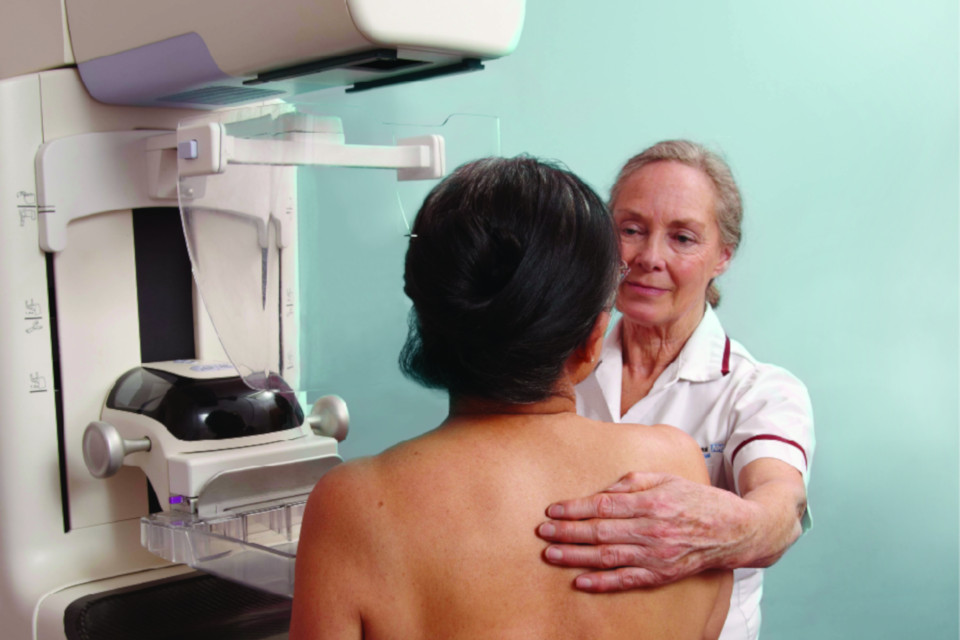
Preparing for your mammogram
To have a mammogram, you need to undress to the waist. So it may be easier to wear a skirt or trousers instead of a dress. Please do not use a spray deodorant or talcum powder as this may show up on your mammogram. You can use roll-on deodorant.
What having a mammogram feels like
Having a mammogram can be uncomfortable, and some women find it painful. Usually, any pain passes quickly.
Please phone your breast screening unit before coming for your appointment if you:
- need information in another format
- need additional support to attend screening, for example if you have a learning disability or mobility problems
- have breast implants
- have a pacemaker or any other implanted medical device
- are pregnant or breastfeeding
- are under the care of a breast consultant
- have had a mammogram in the last 6 months
Breast screening results
You will receive a letter with your breast screening results within 2 weeks of your appointment. The results will also be sent to your GP. Occasionally women will need another mammogram before they get their result. Sometimes technical problems mean that the mammogram is not clear enough to read. If this happens, you will be asked to have another mammogram to get a clearer picture of your breast.
Most women will have no sign of cancer
In about 96 out of every 100 women screened the mammogram will show no sign of cancer, and no further tests are needed. Cancer can still develop between mammograms. Remember to check your breasts and tell your GP straight away if you notice any unusual changes.
Some women will need more tests
The results letter may say you need more tests because the mammogram looks abnormal. About 4 in every 100 women are asked to come back for more tests after screening.
Out of these 4 women, 1 will be found to have cancer. The rest will not have cancer and will go back to having screening invitations every 3 years.
If you are called back for more tests, you may have a breast examination, more mammograms and ultrasound scans. You may also have a biopsy, which is when a small sample is taken from your breast with a needle to be checked under a microscope. You will usually get your results within a week.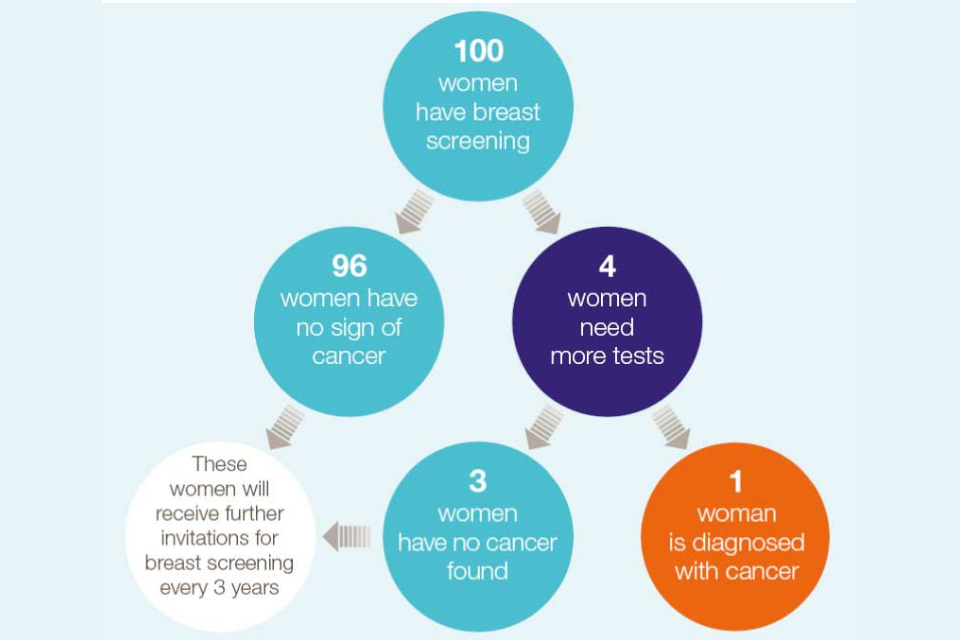
Making a choice: the possible benefits and risks of breast screening
It is your choice whether or not you have breast screening. There are many different reasons why women decide whether or not to have screening. To help you decide, we have included information on the possible benefits and risks.
Screening saves lives from breast cancer
Lives are saved because cancers are diagnosed and treated earlier than they would have been without screening.
Screening finds breast cancers that would never have caused a woman harm
Some women will be diagnosed and treated for breast cancer that would never otherwise have been found and would not have become life-threatening. This is the main risk of screening.
Doctors cannot always tell whether a breast cancer that is diagnosed will go on to be life-threatening or not, so they offer treatment to all women with breast cancer. This means that some women will be offered treatment that they do not need.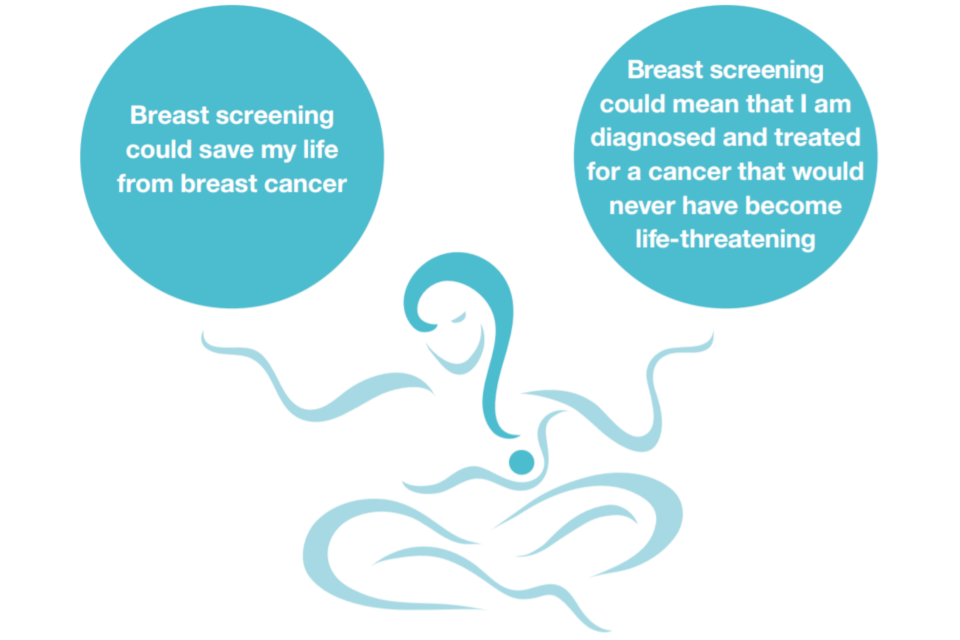
Weighing up the possible benefits and risks of breast screening
There is debate about how many lives are saved by breast screening and how many women are diagnosed with cancers that would never have become life-threatening. The numbers below are the best estimates from a group of experts who have reviewed the evidence.
Saving lives from breast cancer
Screening saves about 1 life from breast cancer for every 200 women who are screened. This adds up to about 1,300 lives saved from breast cancer each year in the UK.
Finding cancers that would never have caused a woman harm
About 3 in every 200 women screened every 3 years from the age of 50 up to their 71st birthday are diagnosed with a cancer that would never have been found without screening and would never have become life-threatening. This adds up to about 4,000 women each year in the UK who are offered treatment they did not need.
Overall, for every 1 woman who has her life saved from breast cancer, about 3 women are diagnosed with a cancer that would never have become life-threatening.
Researchers are trying to find better ways to tell which women have breast cancers that will be life-threatening and which women have cancers that will not.
Can breast screening have other risks?
Most women who need more tests after breast screening are found not to have breast cancer. These women experience unnecessary worry and some feel distress which affects their ability to do their normal day-to-day activities at the time.
X-rays can very rarely cause cancer. Having mammograms every 3 years for 20 years very slightly increases the chance of getting cancer over a woman’s lifetime.
Mammograms do not find all cancers. Sometimes they cannot be seen on the mammogram, and very occasionally mammogram readers will miss a cancer on the X-ray. Your breasts may change between screening appointments so it is important to check your breasts regularly to know what is normal for you. Please talk to your GP if you have any concerns.
Symptoms of breast cancer
If you get to know how your breasts normally look and feel, you will be more likely to spot any changes that could be signs of breast cancer. This is important even if you have been for breast screening. Look out for:
- a lump or thickening in the breast
- a swelling or lump in the armpit
- a change in the nipple, which might be pulled back into the breast, or change shape, you might have a rash that makes the nipple look red and scaly, or have blood or another fluid coming from the nipple
- a change in how the breast feels or looks, it may feel heavy, warm or uneven, or the skin may look dimpled; the size and shape of the breast may change
- constant pain or discomfort in the breast or armpit lasting a number of weeks
If you have any change to your breast, you should complete an eConsult form. You may not have cancer. But if you do, being diagnosed and treated at an early stage may mean you are more likely to survive breast cancer.
This information is available in alternative formats, including other languages (PDF).
Cervical screening (smear test) – recommended for women and people with a cervix aged 25 to 64
It is your choice whether to have a cervical screening test or not. This guidance aims to help you decide. Cervical screening used to be called a ‘smear test’.
Please find below information on cervical screening. If you require this information in a different language this information is available at the bottom of this page.
Why we offer cervical screening
NHS cervical screening helps prevent cervical cancer. It saves thousands of lives from cervical cancer each year in the UK. In England cervical screening currently prevents 70% of cervical cancer deaths. If everyone attended screening regularly, 83% could be prevented.
Who we invite
Cervical screening is for women and people with a cervix. We offer screening every 3 years from age 25 to 49 and every 5 years from age 50 to 64. This is because most cervical cancers develop between these ages. First invitations arrive a few months before people turn 25. You can book your appointment as soon as you get your invitation. We invite some people more often due to a previous screening result (see below).
You should consider having screening regardless of your sexual orientation, sexual history, or whether you have had the human papillomavirus (HPV) vaccination.
If you are a transgender (trans) man registered as female, we will send you invitations for cervical screening. If you are registered as male you won’t receive invitations, but we can arrange an appointment for you if you have a cervix. If you are a trans woman you don’t need cervical screening.
Info for the Transgender and Non-Binary Communities
If you are a trans man or identify as non-binary, you may still be at risk for certain gynecological cancers if you have retained any reproductive organs, such as the womb, cervix, ovaries, fallopian tubes, vagina, or vulva. It’s important to be aware of potential symptoms and to take steps to maintain your gynecological health.
If you still have a cervix and have not yet undergone cervical screening or believe you may be due for one, please call the surgery to book an appointment with one of our nurses. With your consent, we can register you in the Cervical Screening Management System to ensure you receive automatic reminders for future screenings.
Cervical cancer
Cervical cancer happens when cells in the cervix grow in an uncontrolled way and build up to form a lump (also called a tumour). As the tumour grows, cells can eventually spread to other parts of the body and become life-threatening.
Your cervix is the lowest part of your uterus (or womb), and it is found at the top of your vagina.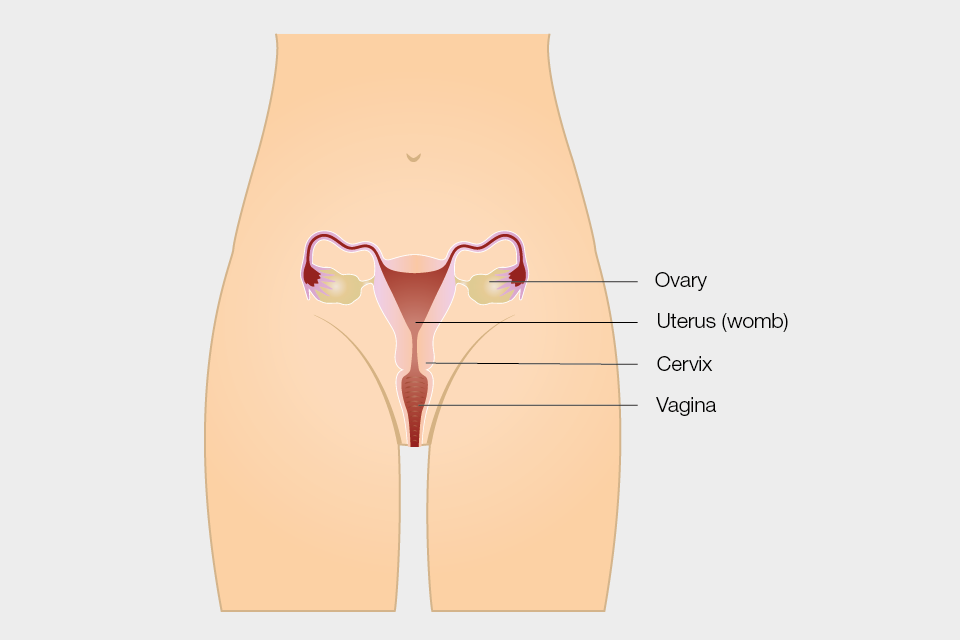
Diagram showing the female reproductive system. The cervix is at the top of the vagina.
HPV and cervical cancer
Nearly all cervical cancers are caused by a virus called human papillomavirus (HPV).
HPV is very common. Most people will get the virus at some point in their life. It is spread through close skin to skin contact during any type of sexual activity with a man or woman. HPV can stay in the body for many years. It can stay at very low or undetectable levels and not cause any problems. This means an HPV infection may have come from a partner a long time ago.
There are many different types of HPV, but only some high-risk types can lead to cancer. The types of HPV that cause cervical cancer do not cause any symptoms. In most cases, your immune system can get rid of the virus without you ever knowing you had it. But sometimes, HPV can cause cells in your cervix to become abnormal.
Your body can usually get rid of the abnormal cells and your cervix returns to normal. But sometimes this doesn’t happen, and the abnormal cells can go on to develop into cancer.
What affects your chances of getting cervical cancer
Having cervical screening lowers your chances of getting cervical cancer. Screening finds abnormal cells so they can be removed before they become cancer.
HPV is found on the skin around the whole genital area and can be spread through any type of sexual activity. This means that condoms or dental dams can help prevent infection, but they don’t provide total protection from HPV.
Smoking increases the risk of cervical cancer because it makes it harder for your body to get rid of HPV infections. Information about stopping smoking is available on the NHS smokefree website.
The HPV vaccination protects against the types of high-risk HPV that cause most cervical cancers. If you have had the HPV vaccination you will still need to consider having cervical screening when you are invited. This is to check for other high-risk HPV types that can lead to cervical cancer.
Having a family history of cervical cancer does not affect your chances of developing cervical cancer.
How cervical screening works
Cervical screening is not a test for cancer. It looks for abnormal cells in the cervix. Abnormal cells can develop into cancer if left untreated.
The test involves using a soft brush to take a small sample of cells from the surface of your cervix. The sample is put into a small plastic container and sent to a laboratory. It is tested for the types of HPV that can cause cervical cancer. If you have a negative result for the most common types of HPV that cause cervical cancer, your risk of cervical cancer is very low and there is no need to check for abnormal cells even if you have had these in the past.
If you have a positive result for HPV we will check the sample for abnormal cells. Abnormal cells are not cancer, but they could develop into cancer if left untreated.
As a next step we may offer you another examination (called a colposcopy) to look at your cervix more closely. If we find abnormal cells during colposcopy we may suggest you have the cells removed. This is how screening can prevent cervical cancer.
No screening test is 100% effective
In cervical screening this is because:
- an HPV infection or abnormal cells can sometimes be missed (a ‘false negative’ result)
- abnormal cells can develop and turn into cancer in between screening tests
- there is a small chance that a result says abnormal cells are found when the cervix is normal (a ‘false positive’ result)
If screening does not find abnormal cells this does not guarantee that you do not have them, or that they will never develop in the future.
Having cervical screening
Before your appointment
Cervical screening is usually carried out by a female nurse here at the practice.
Your appointment should be on a day when you are not having a period. If you don’t have periods, you can be screened at any time. Please don’t use any vaginal medications, lubricants or creams in the 2 days before you have your test because they can affect the results. Please talk to your nurse or doctor if you:
- are pregnant
- have had a hysterectomy
- think it would be difficult for you to have the test
You can speak to your nurse or doctor if you are nervous about screening. They can talk through any questions or concerns you have. If you decide to go ahead with screening, they can make arrangements to help you feel more comfortable.
At your appointment
The actual test only takes 1 to 2 minutes. The whole appointment usually takes about 10 minutes. The nurse will ask you to undress from your waist down (or just remove your underwear if you are wearing a loose skirt) and lie on a bed with your knees bent and apart. You will have a paper sheet or towel to cover your stomach and hips.
They will put a device called a speculum into your vagina and open it gently. This allows them to see your cervix. The speculum is usually made of plastic and a new one is used for each screening test. The nurse or doctor then uses a small soft brush to take a sample of cells from the surface of your cervix. You might feel some discomfort, but this should go away quickly. If it feels painful, tell the nurse or doctor and they will try to make it more comfortable for you.
You are in control of your screening appointment, and you can ask to stop at any time.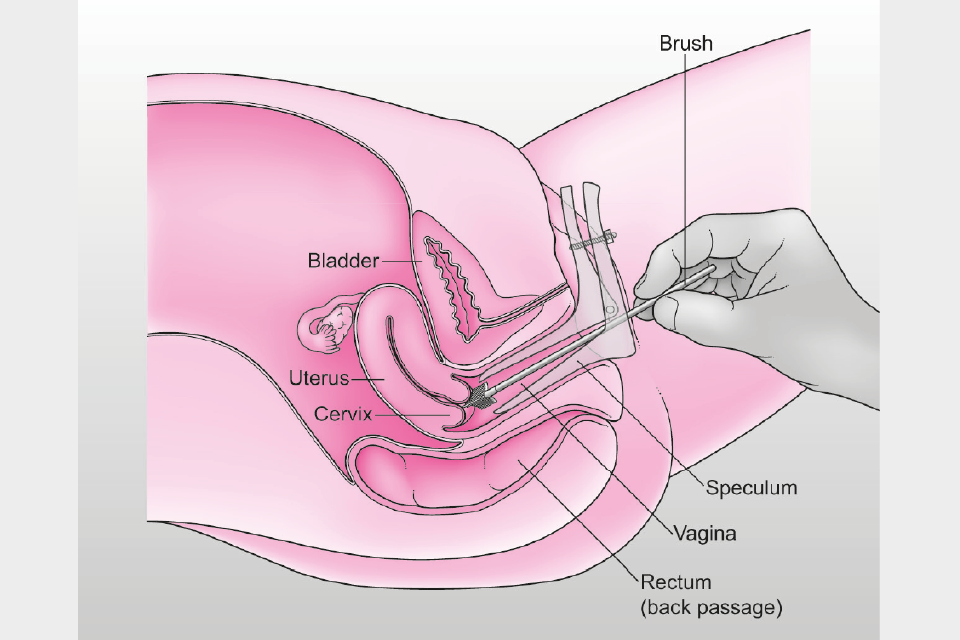
Diagram showing how a cervical screening sample is taken using a speculum and small soft brush. (Image © Jo’s Cervical Cancer Trust.)
Cervical screening results
The nurse will tell you when you can expect your results letter. There are 4 possible results.
HPV negative
An HPV negative result means we will not do any further tests. This result means it is highly unlikely that you will have any abnormal cervical cells. Even if you did, it would be extremely unlikely that they would cause a problem. We will simply call you back for screening again in 3 or 5 years’ time (depending on your age).
HPV positive: no abnormal cells
If your sample is HPV positive we also test it for abnormal cervical cells. If none are found, your result will say you have HPV, but no abnormal cells. We will ask you to come for screening again sooner than usual (your result letter will explain when). This is so we can check if your immune system has got rid of the HPV (this happens in most cases).
HPV positive: abnormal cells found
There are several ‘grades’ of abnormal cells as some are more serious than others. Your result letter will explain what your results mean. If you have HPV and any grade of abnormal cervical cells we will refer you for colposcopy (see information below). We will send you our information leaflet NHS cervical screening – having a colposcopy.
Inadequate result
Occasionally a sample may be called ‘inadequate’. This may be due to a technical problem, for example, if the laboratory cannot get an HPV test result from your sample or cannot see if abnormal cells are present or not. If you have an inadequate test, we will ask you to have cervical screening again in 3 months’ time. We wait so that there are enough cells again to get a sample from.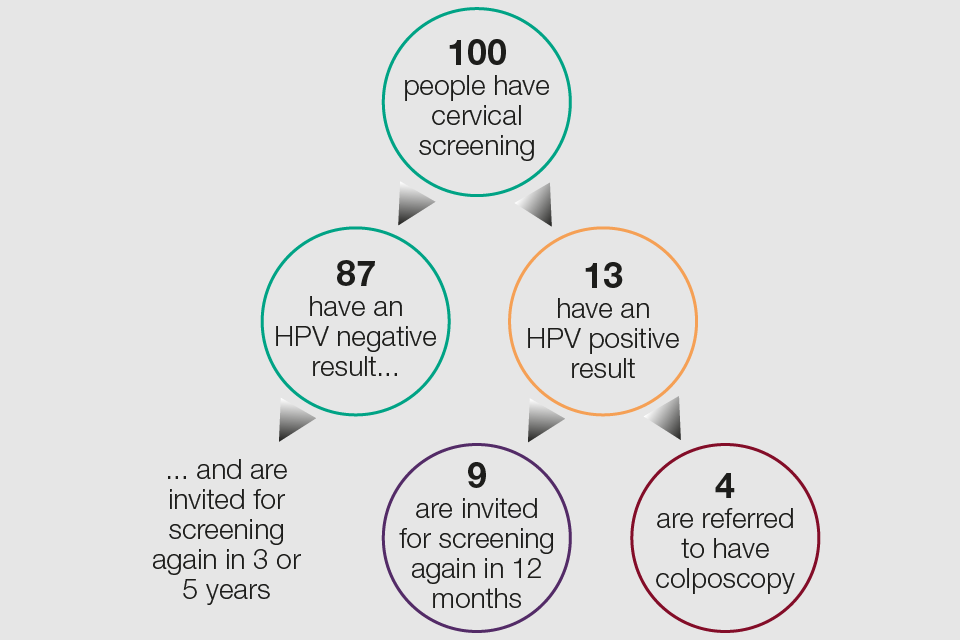
This information is available in alternative formats, including other languages (PDF).
Bowel cancer screening – available from age 60 (with home test kits provided from age 50 in some areas)
You can choose if you take part in bowel cancer screening. This information aims to help you decide.
Why the NHS offers bowel cancer screening
We offer screening to try and find signs of bowel cancer at an early stage when there are no symptoms. This is when treatment can be more effective.
Sometimes cells in the bowel grow too quickly and form a clump known as a bowel polyp. Polyps are not cancers but can develop into cancers over time. Finding polyps means they can be removed.
Regular screening reduces your risk of getting and dying from bowel cancer.
Who we invite for bowel cancer screening
We invite people aged 54 to 74 years for bowel cancer screening every 2 years. We send a bowel cancer screening home test kit. The programme is gradually expanding to make it available to eligible people aged 50 and over. If you are 75 or over, you can still take part in bowel cancer screening every 2 years, but you will not be invited. Phone the free NHS helpline on 0800 707 60 60.
Bowel cancer
The bowel is part of your digestive system. It takes nutrients and water from food and turns what’s left into poo. As illustrated below, the colon and rectum make up the large bowel. Bowel cancer is cancer that’s found anywhere in the large bowel. This includes the colon and rectum.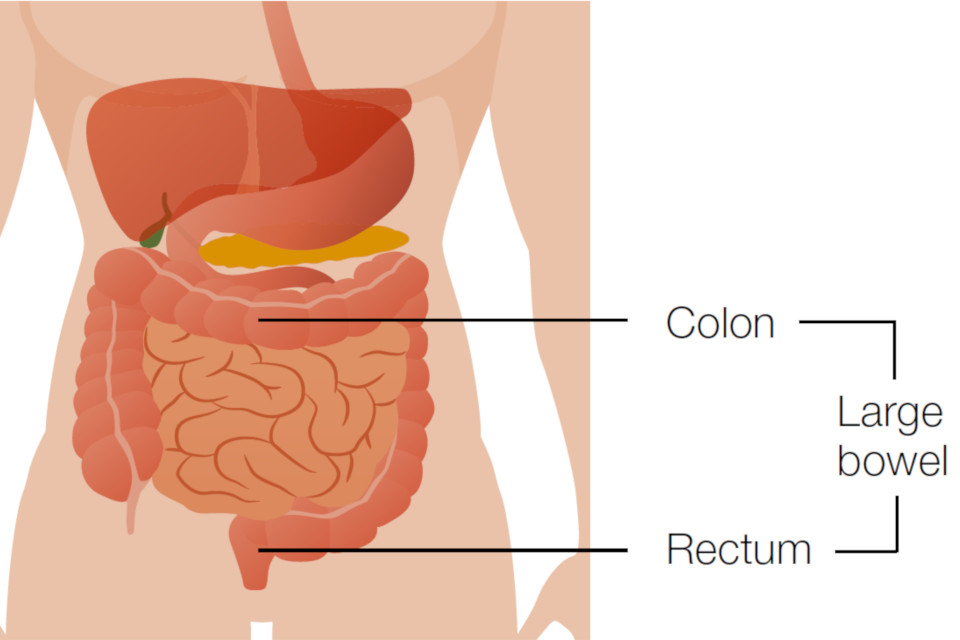
The colon and rectum make up the large bowel and are part of the digestive system.
How bowel cancer screening works
Your invitation will give you information about bowel cancer screening.
We’ll send you a home test kit, called a faecal immunochemical test (FIT). You use this kit to collect a small sample of poo and send it to a lab. The lab checks the sample for tiny amounts of blood. This is because polyps and bowel cancers sometimes bleed. After this, most people will not need any further tests.
If we find blood in your poo sample, you may need further tests to help us find what is causing the blood. We’ll offer you an appointment to talk about having a colonoscopy. A colonoscopy looks at the inside of your bowel.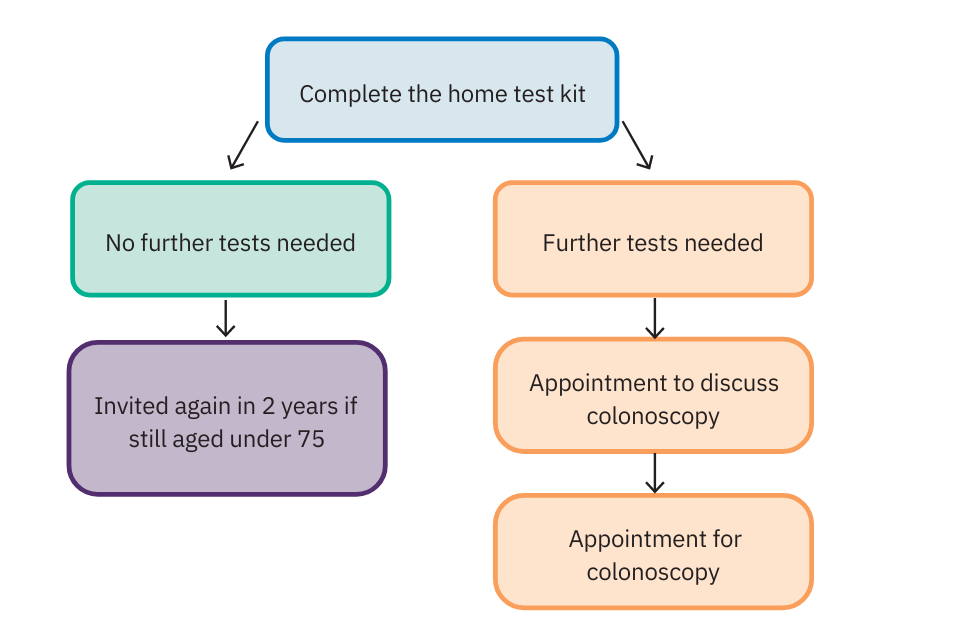
For most people, no further tests are needed. We offer people who do need further tests an appointment to discuss colonoscopy.
Using the home test kit
To do the screening test, you need to collect a small amount of your poo using the kit. Please use a clean disposable container to collect your sample. You then send this sample in the post for testing. The kit includes prepaid packaging and full instructions. Once we’ve checked your sample, we record the result and destroy the test kit and contents. If you have any questions, please call the free NHS helpline on 0800 707 60 60. This includes if you:
- need help to do the test
- are unsure if you should use it, for example, if you’ve had surgery
- have a stoma bag (colostomy or ileostomy) and need advice.
- It’s best to collect your sample when you’re not having a period. Avoid the 2 days before or after you bleed.
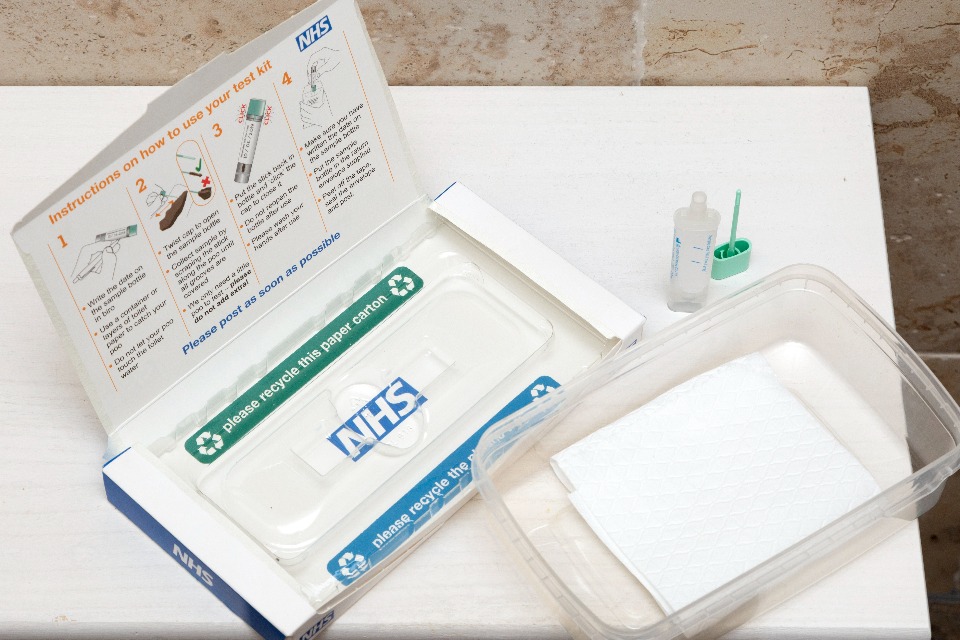 This is an image of the home test kit. Instructions for using the kit are inside the packaging.
Bowel cancer screening results
You should get your results within 2 weeks of sending in your sample. There are 2 possible results:
- No further tests needed at this time
- Further tests needed
No further tests needed at this time
Most people (around 98 in 100) have this result. It means that we did not find any blood in your sample, or only a tiny amount which is less than the screening level.
We’ll offer you bowel cancer screening again in 2 years if you are under the age of 75. This result does not guarantee that you do not have bowel cancer. Bowel cancer could still develop in the future. See a GP if you have or get symptoms of bowel cancer.
Further tests needed
Around 2 in 100 people have this result. It means we found an amount of blood in your poo at or above the screening level. This is also known as a threshold.
Several things can cause blood in poo. We will offer you an appointment to discuss having a colonoscopy to check the cause of the blood. A colonoscopy is a test to check inside your bowels. Find more information on colonoscopy on NHS.UK.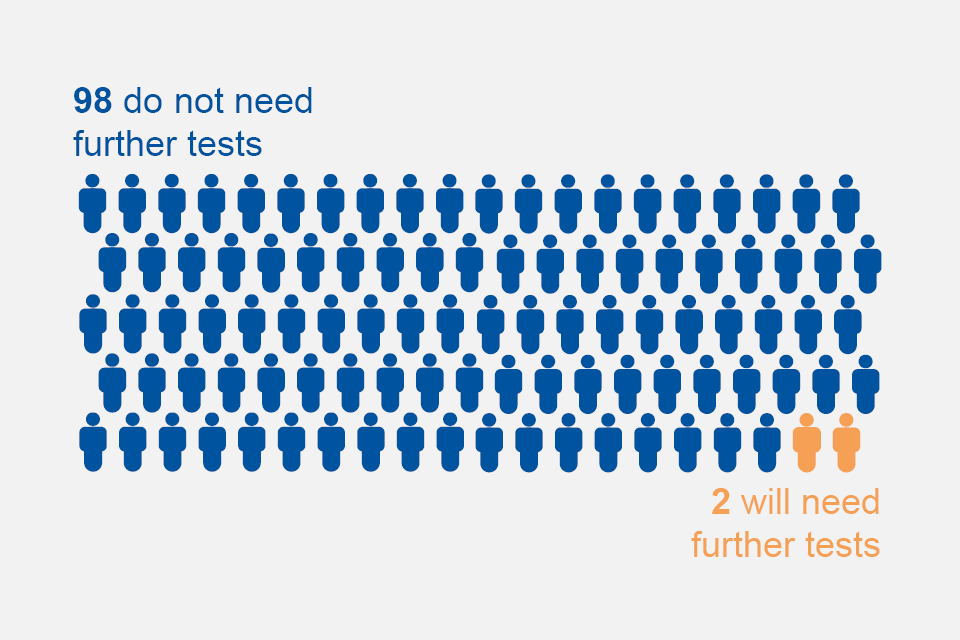
For every 100 people getting their home test kit results, 98 do not need further tests and 2 will need further tests.
Possible risks of bowel cancer screening
No screening test is 100% reliable.
Bowel cancer screening could miss a polyp or cancer. This could happen if the polyp or cancer was not bleeding when you used the home test kit. Most people will not need further tests. If you do, there’s a small risk that having a colonoscopy could damage your bowel, but this is rare. You’ll get more information to help you decide when you have an appointment to discuss a colonoscopy.
Bowel cancer symptoms
Symptoms of bowel cancer may include:
- changes in your poo, such as having softer poo, diarrhoea or constipation that is not usual for you
- needing to poo more or less often than usual for you
- blood in your poo, which may look red or black
- bleeding from your bottom
- often feeling like you need to poo, even if you’ve just been to the toilet
- tummy (abdominal) pain
- a lump in your tummy (abdomen)
- bloating
- losing weight without trying
- feeling very tired, for example because of a lower than normal level of red blood cells (anaemia)
These symptoms do not necessarily mean that you have bowel cancer. If you have any of these symptoms for 3 weeks or more, please speak with your GP. It’s important to do this even if you have recently had bowel cancer screening.
Who is more likely to get bowel cancer
You may be more likely to get bowel cancer if:
- you’re over 50
- you smoke
- you’re overweight
- a close relative has had bowel cancer
- you have inflammatory bowel disease, which includes Crohn’s disease and ulcerative colitis
- you have small growths in your bowel called bowel polyps
- you have Lynch Syndrome or familial adenomatous polyposis.
- Find more information on how to lower your risk of bowel cancer on NHS.UK.
More information and support
For advice on bowel cancer screening, you can phone our free helpline on 0800 707 60 60.
If you have hearing or speech difficulties, you can use the Relay UK service to contact us. Dial 18001 then 0800 707 6060 from your textphone or use the Relay UK app.
This information is available in alternative formats, including other languages (PDF).
PSA testing and prostate cancer checks – if you have concerns, please speak to your GP
Any man can make an appointment with their GP to discuss having the prostate specific antigen (PSA) test. The test is available to anyone with a prostate, including trans women and non-binary people. The prostate specific antigen (PSA) test is a blood test that can help diagnose prostate problems including prostate cancer. It is not a perfect test. It will miss some prostate cancers, will detect some that would never go on to cause harm and can show a raised PSA level when there is no prostate cancer present.
The PSA test and what the results might mean
The image below shows that the prostate gland releases PSA molecules into the blood. The PSA test measures the amount of PSA molecules in a patient’s blood.
It’s normal for all men to have some PSA in their blood. A raised PSA level can be a sign of prostate cancer, but it can be raised for lots of reasons including:
- a urinary or urinary tract infection (UTI)
- prostate stimulation, recent ejaculation or anal sex
- recent vigorous exercise
- other prostate problems, such as an enlarged prostate
If you have a raised PSA, it doesn’t necessarily mean you have cancer. Your doctor should talk to you about your results and what they might mean.
Before you decide whether to have the test, think about the information on this page. Talk to your GP about the possible advantages and disadvantages of the test and your own risk of prostate cancer.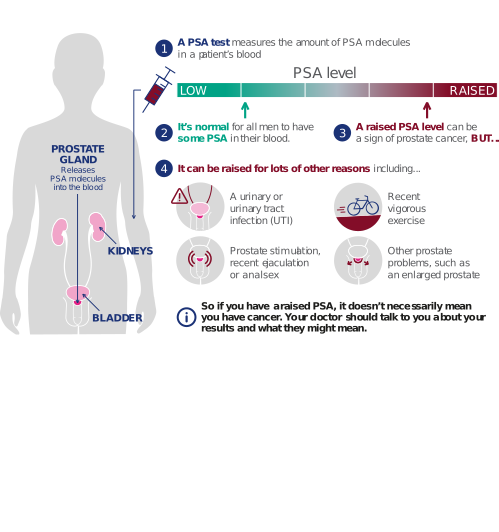
PSA test
PSA is a protein that is made by prostate cells. It is measured using a blood test. Most men will not have a raised PSA level. PSA levels can be raised in a number of conditions, such as a urinary infection, an enlarged prostate, prostatitis or prostate cancer. If you decide you want a PSA test, you should refrain from sexual activity and vigorous exercise, such as cycling, in the 2 days before the test as they can affect the PSA level.
Test results and follow up
If you have a raised PSA level you may be offered another PSA test to check if it remains high.
Your GP may then discuss referral to a specialist (urologist) with you. You may have further investigations, such as a magnetic resonance imaging (MRI) scan of the prostate. Depending on the MRI result, you may then need a biopsy. A biopsy involves taking small samples of your prostate, usually through your back passage or perineum (the skin just in front of the anus), and checking them for cancer.
If further investigations show you have prostate cancer, your specialist will discuss the most appropriate follow-up for you. Regular follow-up (also known as monitoring or surveillance) can be an option for many men who have cancer confined to the prostate gland. Regular follow-up can include blood tests, clinical examination, MRI imaging scans and biopsies. Other options can include surgery, radiotherapy and hormone therapy.
Treatment options for faster growing or advanced cancers include hormone therapy, biopsies and chemotherapy.
Further information
For more information on prostate cancer, prostate problems and PSA testing visit:
For more details, visit the NHS cancer screening website.
Support after a cancer diagnosis
If you or a loved one has been diagnosed with cancer, you are not alone. There are many resources available to support you:
- Macmillan Cancer Support
Practical, emotional, and financial advice.
Phone
0808 808 0000
Website
www.macmillan.org.uk - Cancer Research UK
Reliable information on treatment options and research
Website
www.cancerresearchuk.org - Marie Curie
Support for those with a terminal diagnosis
Website
www.mariecurie.org.uk